
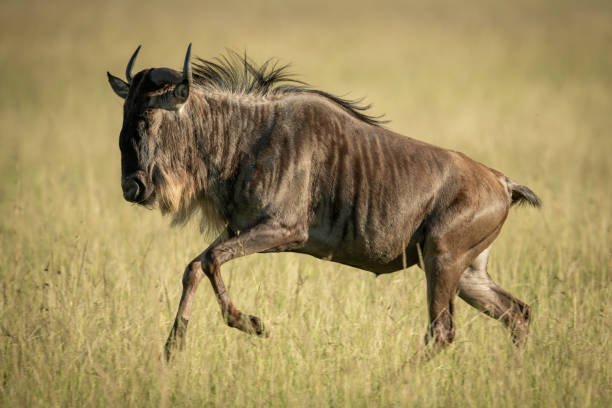
only sounds are wind, the distant percussion of hooves, and the occasional whoop of a hyena working the edge of the plain. Then, in November, the wildebeest arrive. Tens of thousands of them, blue-grey bodies moving in long columns across the flooded grasslands of Zambia’s Western Province, following the first rains south in one of wildlife’s great annual spectacles. This is Liuwa Plain National Park, and it is happening without an audience.
That absence of audience is precisely the point. Liuwa Plain National Park covers 3,369 square kilometres of the upper Zambezi basin, bounded by the Luambimba River to the north and the Luanginga River to the south. It holds Africa’s second-largest wildebeest migration. It has recovered from a near-total wildlife collapse to become a functioning ecosystem with lions, cheetahs, spotted hyenas, African wild dogs, and over 357 recorded bird species. It is the largest employer in its region. And it receives a fraction of the visitors that comparable parks on the continent attract each year.
Liuwa is not undiscovered. It has been known, protected, and managed by the Lozi people of Barotseland for over 150 years. What it lacks is crowds. For the traveller willing to drive ten hours from Lusaka on mixed roads, cross a river by rope-and-pulley ferry, and navigate sandy tracks through a seasonally flooded wilderness, Liuwa offers something increasingly scarce across African safari destinations: space, silence, and a conservation story still being written.
The History: A Royal Reserve That Became a National Park
Liuwa Plain’s conservation history begins not with a government act but with a king. Over 150 years ago, Lubosi Lewanika, the Litunga (king and paramount chief) of the Lozi people, designated Liuwa Plain as a protected area. The Lozi word liuwa means ‘plain’ in the local dialect of the Lozi language, and the area had long served as Lewanika’s personal hunting grounds. His decision to place it under formal protection in the early 1880s made it one of the oldest conservation areas in Africa, predating the establishment of most national parks on the continent by decades.
The Zambian government granted Liuwa National Park status in 1972 and took over administration. The years that followed were difficult. Increased human pressure led to a sharp rise in poaching through the 1990s and into the 2000s. Wildlife populations collapsed. Buffalo, eland, Lichtenstein’s hartebeest, and roan antelope were effectively eliminated from the park. The lion population was reduced to a single individual: a female known as Lady Liuwa, who survived alone on the plains for nine years before any companion arrived. By 2000, tourist arrivals had fallen to around fifty visitors per year. The park was, by any measure, in crisis.
In 2003, a partnership that would define the park’s recovery took shape. African Parks, a non-profit conservation organisation, entered a management agreement with Zambia’s Department of National Parks and Wildlife (DNPW) and the Barotse Royal Establishment (BRE), the formal institution of Lozi traditional governance. The BRE is not a consultative party in this arrangement. It holds a seat on the African Parks Zambia board. The traditional stewards of Liuwa Plain have a direct governance role in its management, a model that has shaped every aspect of the park’s recovery.
Over 150 years ago, the Litunga Lubosi Lewanika designated Liuwa Plain as a protected area: one of the oldest conservation acts in Africa, rooted not in legislation but in Lozi sovereignty over the land.
The Wildlife: Migration, Recovery, and Return
The wildebeest migration is Liuwa’s signature event and the reason most visitors make the journey. Tens of thousands of blue wildebeest gather on the plain and move with the seasonal rains. This spectacle ranks as Africa’s second-largest wildebeest migration after the Serengeti-Maasai Mara. A survey conducted in 1991 recorded approximately 30,000 blue wildebeest in the Liuwa system. Subsequent surveys documented major population declines through the poaching years. Today, the herds are recovering, and the sounds of thousands of wildebeest moving between pans and following seasonal rains are once again a defining feature of the park.
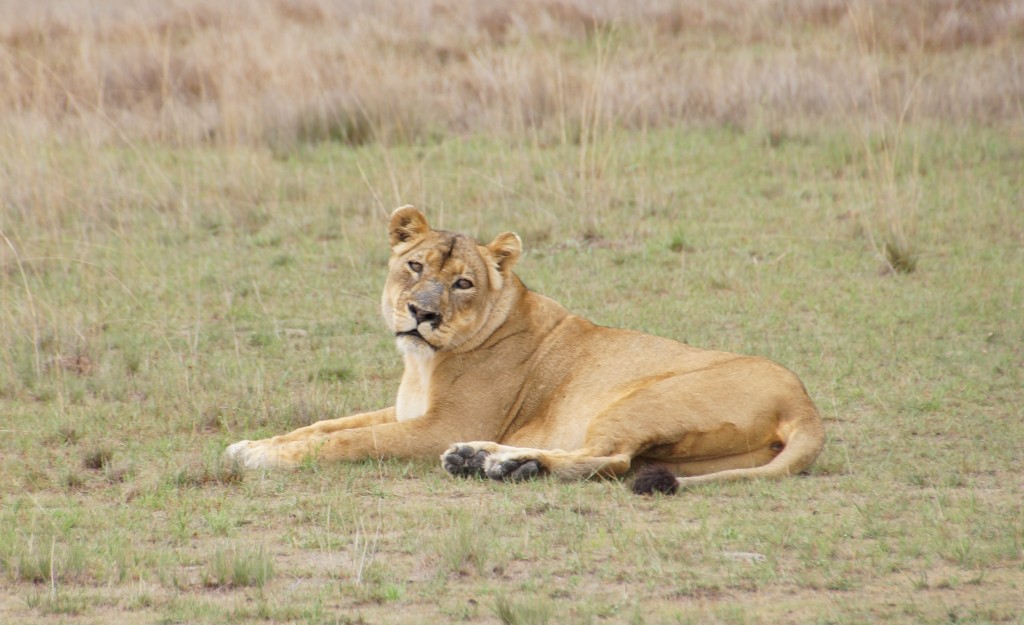
The predator recovery is perhaps the most striking chapter of Liuwa’s restoration. When African Parks assumed management in 2003, there was only one lion left in Lady Liuwa. In 2011, two lionesses were relocated from Kafue National Park. One was killed by a trap in 2012. The other, Sepo, bonded with Lady Liuwa, and the two were later joined by a male named Nakawa. Lady Liuwa’s story was documented in a National Geographic film. She died of natural causes in 2017, believed to be over 17 years old. The pride she helped anchor has since grown into a healthy, reproducing population that regularly produces cubs. A further male lion was introduced from Kafue in 2016 to strengthen the population.
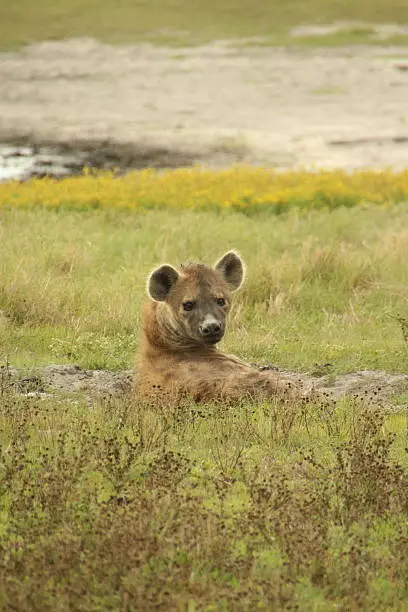
In 2022, a pack of eleven African wild dogs was introduced to Liuwa from Kafue National Park and South Africa, establishing a species that had been absent from the park. Cheetah and spotted hyena are regularly sighted across the plains. The hyena population, in the near absence of lions for years, grew into one of the most visible predator presences in the park: over 350 spotted hyenas have been recorded, and their calls are a constant feature of Liuwa nights.
Beyond the large mammals, Liuwa boasts extraordinary bird diversity. The park records over 357 species, including two that breed in Zambia almost exclusively within its boundaries: the slaty egret and the whiskered tern. The wet season brings more than 100,000 black-winged pratincoles in sweeping migrating flocks, alongside wattled cranes, crowned cranes, sharp-tailed starlings, slaty egrets, rosy-throated longclaws, and numerous waterbird species to the plain’s floods. For serious birders, Liuwa is among the most productive sites in Southern Africa.
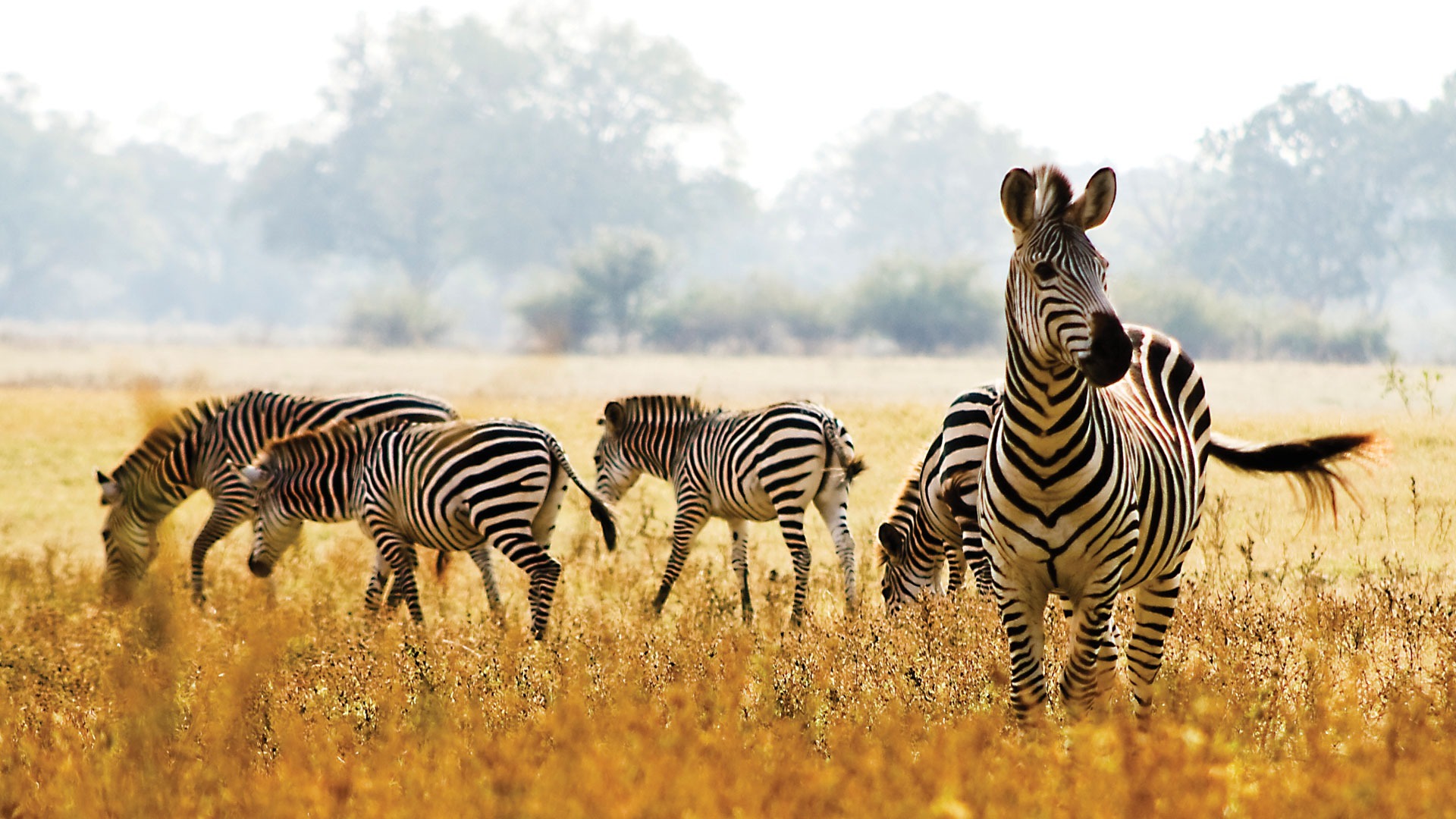
The broader mammal list includes zebra, tsessebe, red lechwe, reedbuck, oribi, and common eland. Zebras migrate alongside the wildebeest. Tsessebe and lechwe are year-round residents. The park’s grasslands also support a suite of smaller predators, including servals and the striped polecat (zorilla).
In the near absence of lions for years, Liuwa’s spotted hyena population grew to over 350 individuals: apex predators that filled the vacuum, whose whooping calls now define the park’s nights.
The Landscape: Flood, Grassland, and the Rhythm of the Zambezi
Liuwa Plain lies within the Barotse Floodplain, one of Africa’s great inland wetland systems and a designated Ramsar site. Two tributaries of the upper Zambezi feed the park: the Luanginga River to the south and the Luambimba River to the north. Every year, the park floods. The waters rise during the rainy season from November to April, transforming the grasslands into a mosaic of shimmering pans, flooded channels, and elevated woodland islands. When the water recedes, it leaves behind a flush of green grass that draws wildlife from across the system.
The grassland that makes up the park’s core stretches approximately 72 by 32 kilometres, dotted with raffia palms and scattered woodlands. The flood is not an obstacle to the ecosystem. It is the engine of it. The seasonal cycle of inundation and recession is what feeds the grass, concentrates the fish, draws the birds, and drives the wildebeest migration. Liuwa without its flood would be a different place entirely.
The park sits at the heart of a wider cultural landscape with a continuous human presence. Around 12,000 people live within the boundaries of Liuwa Plain, a fact that makes it distinctive among African national parks. Zebras are sometimes seen alongside domestic cattle. Fishing communities work the channels alongside hippos and crocodiles. This is not conflict: it is the long-established coexistence that Lozi governance of the land has sustained for generations and which the current management partnership is designed to maintain and strengthen.
Community and Conservation: The Model That Makes Liuwa Work
Liuwa Plain is the largest employer in its region. Ninety-seven per cent of its workforce is drawn from local Zambian communities. Over 230 school children receive scholarships annually. In 2024, the park sponsored 12,500 school textbooks for local students. Nearly 5,000 farmers participate in Farmer Field Schools, an agricultural education programme that supports sustainable farming methods. Traditional fishing practices within the park are regulated under carefully managed permits to ensure lasting fish stocks. Beekeeping projects provide additional income sources for community members. These are not peripheral community relations activities. They are the structural foundation of the park’s legitimacy.
The twenty-year partnership between African Parks, the DNPW, and the Barotse Royal Establishment was formally celebrated in 2024. The BRE’s governance role, including a seat on the African Parks Zambia board, means the Lozi Kingdom’s authority over this landscape is not merely symbolic. The communities living within Liuwa’s boundaries have a direct stake in its management, and that stake is what makes the conservation model durable. For more on the partnership and its outcomes, visit African Parks.
When to Visit: Seasons, Migration, and the Best Windows
Liuwa operates on a different seasonal logic from most of Zambia’s parks. In most of the country’s wildlife destinations, the dry season from May to October is considered prime time, with low vegetation, concentrated water sources, and predictable game viewing. Liuwa inverts this. The park’s most dramatic wildlife event, the wildebeest migration, begins immediately after the first rains in November, and the peak of activity falls in the wet season rather than the dry.
November to December: Migration Season
The first rains trigger the wildebeest migration. This is the most dramatic period in the park’s annual cycle, with tens of thousands of animals moving across the plains. November offers the best combination of migration visibility and road accessibility before the tracks deteriorate with continued rainfall. December is also productive, but as the season progresses, access becomes more difficult. Birdlife explodes with the arrival of migrating species.
May to June: Dry Season Opens
As the flood recedes, grasslands emerge, and wildlife disperses across the plain. May and June are strong months for predator sightings as lions, cheetahs, and wild dogs work the recovering grasslands. The park is dry and cooler, conditions are easier for self-drive visitors, and birdlife remains diverse in the remaining wetlands. Wildebeest and zebra are still present before they retreat with the dry season.
July to October: Dry Season
The driest months bring warmer temperatures, particularly in October. Roads are fully accessible, and sandy tracks are at their most navigable. Large predators, particularly hyenas, are consistently visible. Wildebeest numbers are lower as herds have dispersed, but general game viewing across the plain is reliable. October and November, when temperatures peak before the rains, require careful vehicle management on approach through the deep sand near Kalabo.
March to April: Flood Peak and Kuomboka
The Barotse floodplain is at or near peak flood. Drive-in access to Liuwa is limited or impossible during this period. The Kuomboka ceremony, the Lozi Kingdom’s annual royal procession from the flooded palace at Lealui to the winter capital at Limulunga, takes place in March or April. For those visiting Western Province during this period, the Kuomboka is worth planning around. It can be combined with the park visit once the flood begins to recede in May.
Getting There: Access, Routes, and What to Prepare
Liuwa Plain does not have an easy front door. That is by design and by geography, and it is what keeps it intact. The park is entered via Kalabo, the nearest town, located approximately one hour west of Mongu, the provincial capital of Western Province. African Parks maintains its reception at the Kalabo harbour. This is where visitors check in, collect any permits, and board the pont: a flat-bottomed ferry that operates by rope and pulley across the river channel. On the far side, the tar road ends and the sandy tracks into the park begin.
By Air
Proflight Zambia operates scheduled domestic flights between Lusaka and Kalabo, making air access the most efficient option for visitors without their own vehicle. Mongu Airport (MHQ) also receives domestic flights from Lusaka and serves as the regional hub for Western Province. From Mongu, Kalabo is approximately one hour by road. The African Parks offices and reception at the Kalabo harbour are the first point of contact before entering the park.
By Road from Lusaka
The drive from Lusaka to Kalabo takes approximately ten hours, heading west through Kafue National Park to Kaomo (the recommended fuel stop), continuing to Mongu on a sealed road, and then west to Kalabo. The Lusaka-Mongu section is largely sealed and manageable in a standard vehicle. Beyond Mongu to Kalabo, a tar road across the floodplain now provides year-round access to Kalabo town. Inside the park, conditions revert to sandy tracks requiring a 4×4 vehicle with high clearance.
By Road from Livingstone
From Livingstone, the route heads west to Sesheke, then north on the M10 via Senanga to Mongu, a journey of approximately 8 hours. From Mongu, the Kalabo approach is the same as from Lusaka. Note that the road between Kazangula and Sesheke is a challenging stretch that adds considerable time and demands on a vehicle.
Vehicle Requirements
A 4×4 vehicle with high ground clearance is required on all routes within the park. The sand between the Kalabo ferry and the African Parks headquarters is the most challenging section of the approach: deep, soft, and slow, particularly in October and November when ambient temperatures are high, and overheating is a risk in heavily loaded vehicles. Reducing tyre pressure for the sandy approach is strongly recommended. From the African Parks headquarters, tracks improve as you move further into the park.
Also Read:
- Zambia Western Province Travel Guide: Barotse Floodplain, Liuwa Plain and the Lozi Kingdom
- Kafue National Park: Zambia’s Giant and Africa’s Most Underrated Safari Destination
- Victoria Falls from the Zambian Side: What Changes When the Mist Clears
Where to Stay: Accommodation in Liuwa Plain
King Lewanika Lodge
The park’s luxury accommodation is King Lewanika Lodge, operated by Time and Tide. Named after the Litunga who established Liuwa’s protections in the 1880s, the lodge accommodates 15 guests across 6 villas, one of which has 2 bedrooms. It is a high-end property priced accordingly, with guided game drives, walking safaris, and full board included. For current rates and bookings, contact Time and Tide directly.
Sibika Camp
A self-catering option in the south-eastern corner of the park, Sibika Camp has five en-suite, self-contained bedrooms on raised platforms with views across the plains. Guests bring their own food. The camp is well equipped with kitchen facilities and offers a comfortable middle ground between lodge and camping. Booking is required.
Campsites
African Parks operates five campsites across the park: Kwale, Lyangu, Katoyana, Mukalibumbu, and Sikale. Each site accommodates four camping setups. Four of the five sites have flushing toilets, hot showers, and camp attendants. Sikale is a wilderness campsite with no facilities. All sites are solar-lit but have no charging points. Bookings are made through visitliuwa.org.
Activities: What to Do in Liuwa Plain
Game Drives
Guided game drives operate from King Lewanika Lodge in cool mornings and late afternoons on a ten-seater game viewer with a qualified guide. Self-drive visitors can also hire community scouts at the African Parks reception in Kalabo: local guides who direct visitors through the park and provide knowledge of animal movements and terrain. Booking is required for both guided and scout-assisted drives.
Walking Safaris
Guided walking safaris are available across the park. Walking through Liuwa’s open grasslands with a knowledgeable guide brings an immediacy that a vehicle cannot replicate: animal signs, tracks, the sounds and smells of the plain, and proximity to wildlife on its own terms. Walking safaris are available to both lodge guests and self-catering or camping visitors by advance arrangement with African Parks.
Birdwatching
With over 357 recorded species across a landscape that shifts dramatically between wet and dry seasons, Liuwa Plain is one of Southern Africa’s most rewarding birdwatching destinations. Priority species for visiting birders include the slaty egret and whiskered tern, both of which breed in Zambia almost exclusively within the park, alongside rosy-throated longclaws, sharp-tailed starlings, wattled cranes, crowned cranes, and the spectacle of over 100,000 black-winged pratincoles during peak wet season.
Kuomboka Festival
The Kuomboka, the Lozi Kingdom’s annual ceremony marking the Litunga’s move from the flooded plain at Lealui to the winter capital at Limulunga, takes place in March or April, depending on water levels and the phase of the moon. The 2026 Kuomboka was set for 28 March. Between 200,000 and 250,000 people attend the ceremony, which involves the Litunga’s six-to-eight-hour procession by royal barge across the flooded plain. The ceremony can be combined with a visit to Liuwa as the flood begins to recede. For confirmed dates, visit the Zambia Tourism Board.
Frequently Asked Questions
1. What is the best time to visit Liuwa Plain National Park?
November is the prime month for the wildebeest migration, immediately after the first rains, when herds are at their largest and roads are still passable. May and June are the best months for general wildlife viewing in drier conditions, with good predator sightings and recovering grasslands. July through October offers reliable access but lower wildebeest numbers. Avoid January to April for drive-in visits, as the park floods and tracks become impassable.
2. How do I get to Liuwa Plain National Park?
The park is entered via Kalabo town in Zambia’s Western Province, approximately one hour west of Mongu. From Lusaka, the drive takes approximately ten hours. Proflight operates scheduled flights from Lusaka to Kalabo. From the Kalabo harbour, visitors cross the river by punt (a rope-and-pulley ferry) and enter the park. A 4×4 vehicle with high clearance is mandatory. Check in with African Parks at the Kalabo Harbour reception before entering.
3. Is Liuwa Plain suitable for self-driving visitors?
Yes, with the right preparation. A 4×4 with high clearance is essential. The sandy approach from Kalabo to the African Parks headquarters is the most demanding section. Reducing tyre pressure is strongly recommended. Community scouts can be hired at the Kalabo reception for local guidance inside the park. Check road conditions in advance by contacting African Parks via visitliuwa.org, particularly in October and November when temperatures are high, and sand is at its most difficult.
4. What wildlife can I expect to see at Liuwa Plain?
The wildebeest migration is the signature event, bringing tens of thousands of blue wildebeest to the plain from November. Resident mammals include zebra, tsessebe, red lechwe, reedbuck, and oribi. Predators include lions, cheetahs, spotted hyenas, and a pack of African wild dogs introduced in 2022. The park records over 357 bird species, including the slaty egret and whiskered tern, which breed in Zambia almost exclusively within Liuwa. The hyena population alone exceeds 350 individuals and is consistently visible.
5. Who manages Liuwa Plain National Park?
Liuwa is managed under a tripartite partnership between African Parks, Zambia’s Department of National Parks and Wildlife (DNPW), and the Barotse Royal Establishment (BRE), the traditional governance institution of the Lozi Kingdom. The partnership has been in place since 2003. The BRE holds a seat on the African Parks Zambia board. Around 97 per cent of the park’s workforce is drawn from local communities, and the park funds scholarships, agricultural education, and other community development programmes.
6. What accommodation is available at Liuwa Plain?
King Lewanika Lodge, operated by Time and Tide, offers luxury accommodation for up to fifteen guests across six villas with full board and guiding included. Sibika Camp provides five self-catering en-suite rooms in the south-eastern corner of the park. Five staffed campsites, each with capacity for four setups, are distributed across the park. Four have flushing toilets and hot showers. The fifth, Sikale, is a wilderness campsite with no facilities. Book all accommodation through visitliuwa.org.
Plan Your Liuwa Plain Visit
Liuwa Plain is most rewarding as part of a wider Western Province itinerary that also takes in the Barotse Floodplain, the Kuomboka ceremony in March or April, and Ngonye Falls in the south of the province. For a complete guide to the region, visit our Zambia Western Province travel guide. For accommodation booking, entry requirements, and current park conditions, visit visitliuwa.org and the Zambia Tourism Board. All tourism revenue from Liuwa Plain goes directly to conservation operations and community development programmes.
